Техническое описание на английском языке.
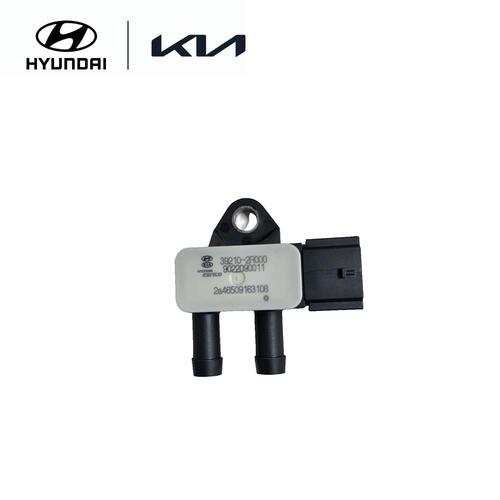
Hyundai Mobis lists this component as a differential pressure sensor.
How it works
An exhaust differential pressure sensor measures the pressure difference across an exhaust-system component such as a particulate filter. The engine control unit uses this information to estimate exhaust restriction and help manage particulate filter regeneration.
What happens when it fails
Incorrect pressure readings can cause the control unit to misjudge particulate filter loading. This may interfere with regeneration and eventually contribute to excessive exhaust restriction.
Signs of wear or failure
- Differential pressure sensor fault codes
- Abnormal particulate filter pressure readings
- Repeated or unsuccessful regeneration
- Reduced engine power during emissions-system faults
Usually replaced together with
- Blocked or deteriorated pressure hoses
- Pressure hose clamps
- Damaged sensor connector terminals
Replacement notes
- Inspect pressure hoses for cracks, soot blockage and condensation before replacing the sensor.
- Mark the pressure connections before removal to avoid reversing them.
- Perform the specified sensor adaptation or zero-point calibration where required.
Questions and answers
- Can blocked pressure hoses imitate a faulty sensor?
- Yes. Soot or condensation inside a pressure hose can prevent the sensor from receiving the actual exhaust pressure.
- Can this type of sensor cause frequent particulate filter regeneration?
- An incorrectly high pressure reading can contribute to excessive regeneration requests. Actual filter restriction and sensor readings should be compared before replacing components.
- Is a differential pressure sensor the same as a PM sensor?
- A differential pressure sensor measures pressure differences, while a PM sensor detects exhaust particles. They provide different information to the engine control unit.
Part identification based on catalog data from partsro.com.