ტექნიკური აღწერა ინგლისურ ენაზეა.
How it works
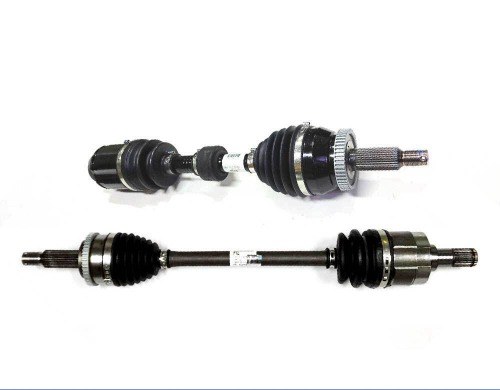
The differential-side CV boot seals the inner axle joint near the transmission or differential. It retains joint lubricant while accommodating suspension movement and any axial movement permitted by the joint design.
What happens when it fails
A split boot allows lubricant loss and contamination of the inner joint. Progressive wear can restrict smooth joint movement and produce vibration when torque is applied.
Signs of wear or failure
- Grease deposits around the transmission or differential
- Split inner boot folds
- Loose or displaced boot clamps
- Acceleration shudder after inner joint damage develops
Usually replaced together with
- Inner CV joint grease
- Inner boot retaining clamps
- Axle retaining circlip where fitted
Replacement notes
- Support the axle and disconnect it from the drivetrain as required by the joint design.
- Keep internal joint components clean and preserve their required assembly orientation.
- Position the boot at its specified installed shape before securing the clamps.
Questions and answers
- Can I use an outer CV boot instead of an inner boot?
- Inner and outer joints have different movement requirements and housing profiles. An incorrect boot may stretch, collapse or leak during suspension travel.
- Can an inner CV boot leak cause vibration during acceleration?
- The torn boot itself normally does not create vibration. Lubricant loss and contamination can damage the joint, producing shudder under drivetrain load.
- Should I replace the differential oil seal during this repair?
- Inspect the seal when the axle is removed. Replace it if damaged, leaking or required by the drivetrain service procedure.