ტექნიკური აღწერა ინგლისურ ენაზეა.
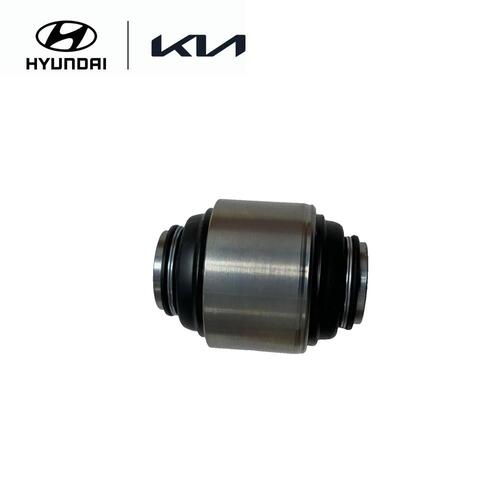
Hyundai catalogs this component as a four-wheel-drive coupling assembly. It is also identified as an AWD coupling unit.
How it works
An on-demand all-wheel-drive coupling regulates torque transfer between the driven axles. By varying its engagement, the coupling allows the drivetrain to accommodate axle speed differences while supplying additional traction when required.
What happens when it fails
Insufficient coupling engagement can prevent torque from reaching the secondary driven axle. Excessive or uncontrolled engagement can cause drivetrain binding, vibration and accelerated mechanical wear.
Signs of wear or failure
- All-wheel-drive system warning light
- Reduced traction despite AWD engagement requests
- Drivetrain shudder during acceleration
- Binding or judder during tight turns
Usually replaced together with
- Coupling mounting seals where fitted
- Specified non-reusable driveline fasteners
- Specified coupling or differential fluid when required
Replacement notes
- Use a vehicle lift and support connected driveline components during removal.
- Inspect mating splines and adjacent seals for wear or leakage.
- Perform any manufacturer-required coupling initialization or adaptation after installation.
Questions and answers
- Is the AWD coupling the same as the rear differential?
- The coupling regulates torque supplied to an axle. The differential distributes that torque between the wheels while accommodating their different rotational speeds.
- Can mismatched tires damage an AWD coupling?
- Differences in tire rolling circumference can create persistent axle speed differences, increasing coupling workload and heat generation.
- Can I continue driving with a defective AWD coupling?
- Loss of engagement may reduce available traction. Binding, severe vibration or abnormal mechanical noise requires stopping and arranging professional inspection.
Part identification based on catalog data from hyundaipartsdeal.com, hyundai.oempartsonline.com.