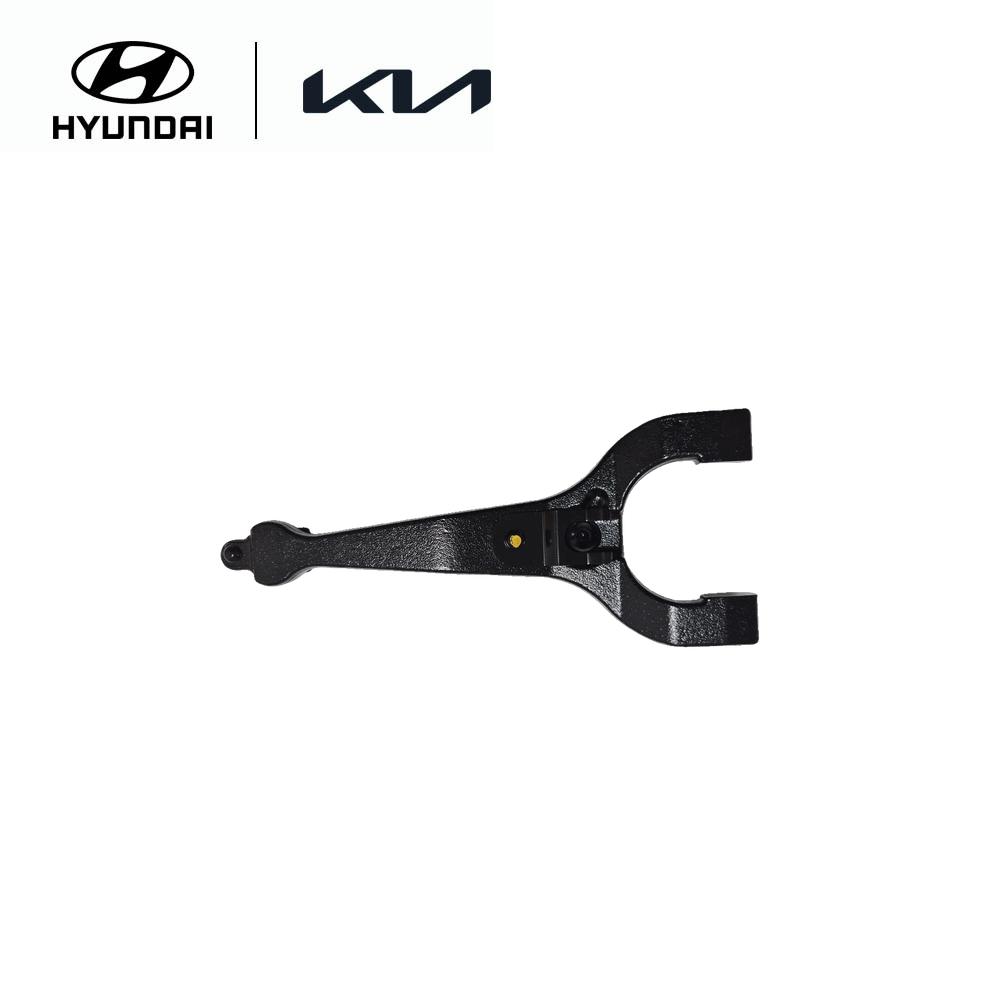
ტექნიკური აღწერა ინგლისურ ენაზეა.
How it works
A clutch release rocker arm transfers actuator movement to the clutch release mechanism. Its pivoting action converts actuator travel into movement of the release bearing or associated linkage.
What happens when it fails
Wear at the pivot or contact surfaces can reduce effective clutch release travel. Severe deformation or breakage can prevent the clutch from disengaging.
Signs of wear or failure
- Difficulty disengaging the clutch
- Abnormal noise during clutch operation
- Uneven clutch release movement
- Excessive play in the release linkage
Usually replaced together with
- Clutch release bearing
- Worn pivot components
- Release mechanism retaining clips
Replacement notes
- Access may require transmission removal and suitable support equipment.
- Inspect the rocker contact surfaces and pivot for wear.
- Keep lubricant away from clutch friction surfaces.
Questions and answers
- Can a worn rocker arm prevent gear selection?
- Incomplete clutch disengagement can leave torque passing through the transmission during shifting.
- Should the release bearing be inspected?
- Rough bearing movement or damaged contact surfaces can accelerate rocker arm wear.
- Is transmission removal necessary?
- Access depends on the release mechanism design. Internally mounted components generally require transmission separation.