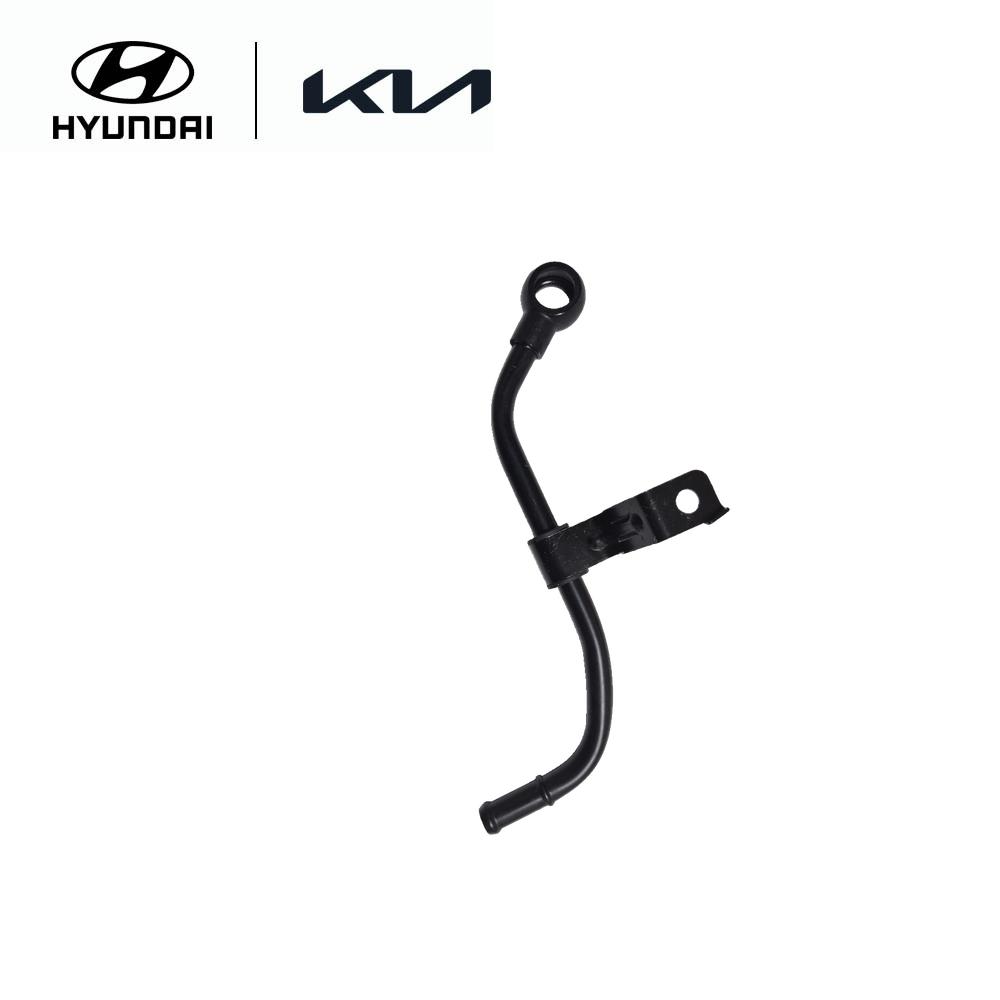
ტექნიკური აღწერა ინგლისურ ენაზეა.
The Hyundai Mobis catalog identifies this component as a return tube assembly.
How it works
A fluid return tube carries fluid from a working component back to its reservoir or circulation circuit. The tube maintains a controlled return path and prevents fluid from escaping into surrounding areas.
What happens when it fails
Cracks, corrosion or damaged connections can cause fluid leakage. Internal restrictions or deformation can interfere with the return flow and cause fluid accumulation upstream.
Signs of wear or failure
- Fluid residue around tube connections
- Visible corrosion or cracks
- Crushed or distorted tube sections
- Fluid dripping from the return line
Usually replaced together with
- Return tube connection seals where fitted
- Damaged retaining clips
- Corresponding system fluid as required
Replacement notes
- Identify the fluid circuit and follow its draining or depressurization procedure before disconnecting the tube.
- Keep exposed connections covered to prevent contamination.
- Install the replacement without bending it into alignment or stressing its connections.
Questions and answers
- Can a damaged return tube be repaired by bending it back?
- A deformed tube may retain internal restrictions or develop cracks. Replacement is preferable when the fluid passage has been compromised.
- Can I substitute an ordinary rubber hose?
- Any substitute must meet the fluid compatibility, temperature, pressure and routing requirements of the original circuit.
- Do the connection seals need replacement?
- Renew disturbed non-reusable seals and inspect the connection surfaces for corrosion or damage.
Part identification based on catalog data from partsro.com.