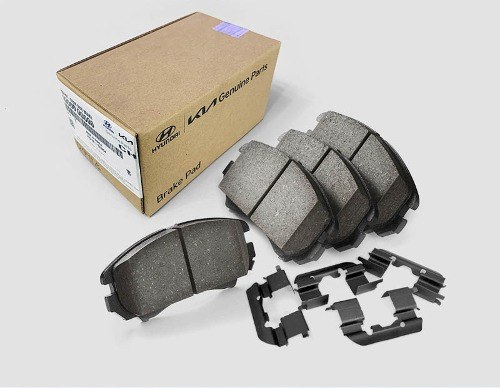
Hyundai Mobis identifies this component as a front disc brake pad kit. It is cataloged as a front wheel brake pad set.
How it works
Front disc brake pads press against the rotating brake discs when hydraulic pressure operates the calipers. Friction converts vehicle motion into heat, with the front brakes typically handling a substantial share of braking force.
What happens when it fails
Normal wear gradually removes the friction material until the backing plate may contact the brake disc. Contaminated or unevenly worn pads can reduce braking effectiveness and damage the disc surface.
Signs of wear or failure
- High-pitched squealing during front brake application
- Metallic grinding from the front wheels
- Visibly depleted friction material
- Vehicle pulling sideways during braking when pad wear is uneven
Usually replaced together with
- Front brake discs if worn or damaged
- Brake pad retaining clips
- Brake pad wear sensors where separately fitted
Replacement notes
- Remove the front wheels and support the released calipers without stretching their brake hoses.
- Use an appropriate piston compression tool and monitor the brake fluid reservoir.
- Clean the pad contact surfaces and follow the specified bedding procedure after installation.
Questions and answers
- Can I install new front brake pads on existing brake discs?
- Yes, if the discs remain within service limits and have no excessive scoring, cracking or damaging surface irregularities.
- Should I replace brake pads on both front wheels?
- Yes. Renew the pads across the front axle to maintain balanced friction characteristics during braking.
- Why is the brake pedal soft immediately after pad replacement?
- Retracted caliper pistons must move outward to establish pad contact. Operate the pedal until it becomes firm before moving the vehicle, and investigate any persistent softness.
Part identification based on catalog data from partsro.com.